Thousands of women travel through Morocco every year, alone and in groups, and most have a wonderful time. It helps to arrive knowing what to expect. This is a frank guide, written with the feedback of the many women who have travelled with us.
1. Is Morocco safe for women?
Yes. Violent crime against tourists is rare, and Moroccans are, on the whole, courteous and protective towards guests. What women do sometimes experience is unwanted attention in the street: comments, compliments or persistent offers to guide or sell. It is tiresome rather than dangerous, and it is far more common in the tourist areas of big cities than in villages or the desert.
It helps to understand the setting. Morocco is a family-centred society where public space, especially cafés and street corners, has traditionally belonged to men, while women's social life happens at home, in the hammam and in each other's houses. That is changing fast in the cities, where women work in every profession and dress in every style, from jeans to djellabas.

2. What to wear
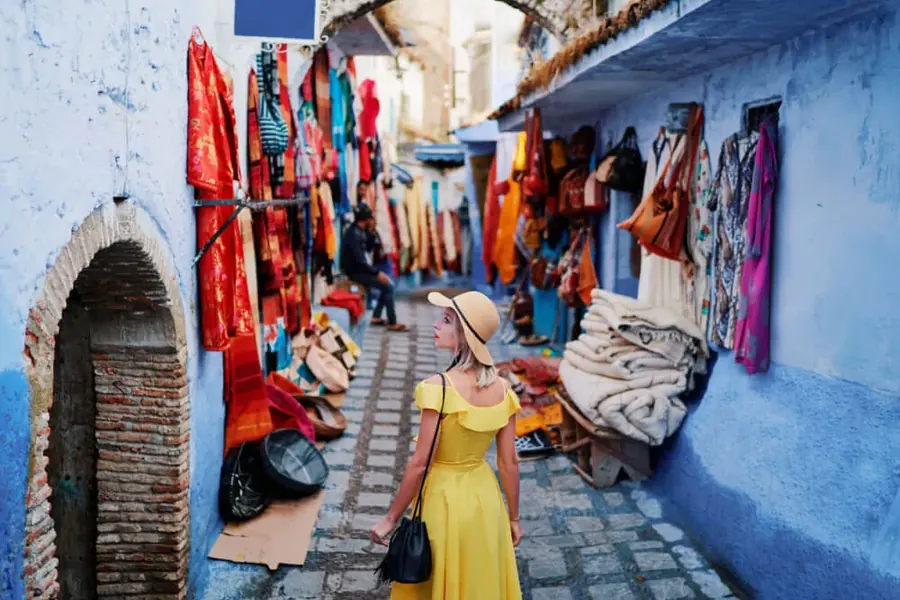
There is no dress code for visitors, and you do not need to cover your hair. Dressing modestly is simply the easiest way to draw less attention and to show respect.
- Loose trousers, long skirts or dresses that cover the knee.
- Tops that cover the shoulders and chest.
- A light scarf, useful for sun, dust and visiting religious sites.
- Swimwear is fine at hotel pools and beach resorts.

3. Dealing with unwanted attention
Most of it comes from a small number of young men in a few busy streets. It is rarely more than words, and these responses work.
- Ignore comments and keep walking: any reply is taken as an opening.
- Say 'la, shukran' (no, thank you) once, firmly, and move on.
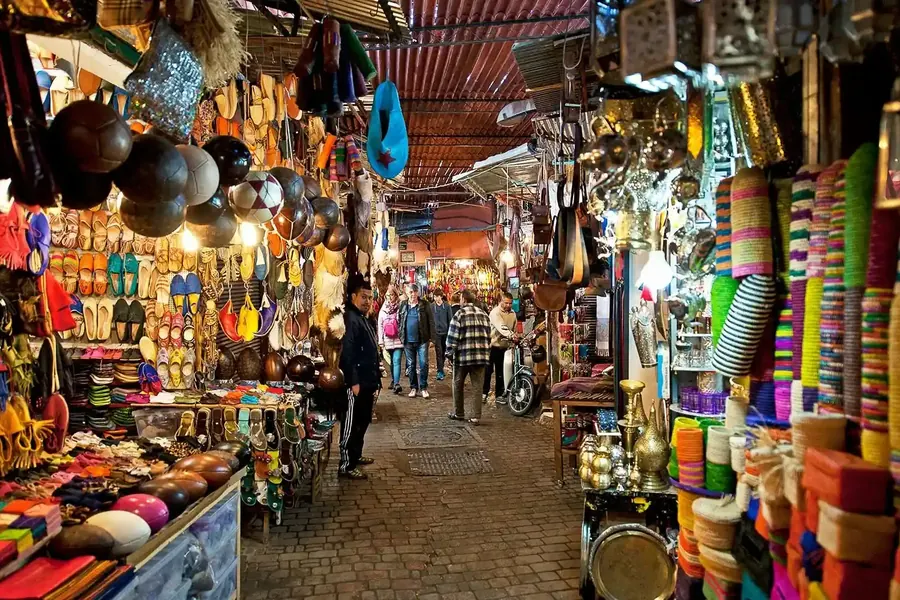
- Sunglasses help you avoid eye contact in busy souks.
- If someone persists, step into a shop or café, or approach a family or a policeman.
- Trust your instincts, as you would anywhere.
Local tip: Unofficial 'guides' who insist a street is closed are almost always wrong. Smile, say no and carry on.
4. Getting around
Use the small city taxis and agree the fare or ask for the meter. Trains are comfortable and safe, with first-class compartments that are calm. After dark, stick to lit, busy streets in the medina or take a taxi to your riad door; many riads will send someone to meet you.
In the south and the desert, most women travel with a driver-guide, which removes almost all of the hassle and lets you relax.
5. The hammam: what to expect
The public hammam is a weekly ritual for Moroccan women and a sociable place. Men and women bathe separately, either in different buildings or at different hours. You undress to your underwear bottoms, sit in a warm tiled room, wash with soft black soap and are then scrubbed with a rough glove until your skin is new.
Neighbourhood hammams are cheap and authentic; bring your own towel, soap and glove, or buy them at the door. Hotel and riad spas offer the same treatment in private, with more comfort and at a higher price. Either way, you will come out feeling lighter.
6. Cafés, restaurants and evenings
Traditional street cafés are still mostly male, and a woman alone may feel watched there. Modern cafés, pastry shops, roof terraces and restaurants are entirely comfortable, and so are the food stalls of Jemaa el-Fna, where families eat together. In the evening the medinas stay lively until around ten; after that, take a taxi or ask your riad to send someone to walk you back.
7. Experiences women love
Travelling as a woman also opens doors that stay closed to men. These are the experiences our guests mention most.
- A hammam: Women-only hours or women's hammams offer a traditional scrub and a glimpse of local life.
- Cooking with a family: Many riads arrange classes with the women of the house.
- Women's cooperatives: Argan oil, carpets and couscous cooperatives provide independent income for rural women.
- The desert: Our female guests consistently name the camp as the place they felt most at ease.
8. Health and practical matters
- Sanitary products: Pads are sold everywhere; tampons are harder to find outside big supermarkets, so bring your own.
- Toilets: Carry tissues and hand gel, especially on driving days.
- Pharmacies: Well stocked and easy to find, marked with a green cross.
- Sun: A hat and a long-sleeved shirt protect better than sunscreen alone.
- Photos: Many Moroccan women prefer not to be photographed. Always ask first.
9. In the desert camp
Women often tell us they were nervous about the desert and found it the easiest part of the trip. You have a private tent with its own bathroom, the staff are local men who have worked with visitors for years, and the atmosphere around the fire is that of a family gathering. There is nobody selling anything, and nothing to do but watch the sky.
10. Travelling solo
Solo travel in Morocco is very doable. Choose well-reviewed riads, where hosts tend to look after single guests, and consider joining a guide for the medinas and a private tour for the south. You will meet other travellers easily in riads and desert camps.
Arrive in a new city in daylight when you can, and book an airport transfer through your riad for the first night. Share your itinerary with someone at home, keep your phone charged and save your riad's number. These are ordinary precautions, and most solo travellers report that the hardest part was simply the first afternoon.
Frequently Asked Questions
Do I need to wear a headscarf in Morocco?
No. Visitors are not expected to cover their hair, except when entering the few mosques open to non-Muslims.
Can women travel alone in the Sahara?
Yes. With a reputable guide and camp it is one of the safest and most relaxed parts of the country.
Is it acceptable to travel during Ramadan?
Yes. Avoid eating and drinking in the street during the day out of courtesy, and enjoy the festive evenings.
Is it comfortable to travel alone with a male driver?
Yes. Our driver-guides are professionals who regularly accompany women travelling alone or with friends, and many guests remark on how looked-after they felt.
Can I wear a bikini in Morocco?
At hotel pools, private riads and resort beaches, yes. On public beaches used by local families, a one-piece or a cover-up is more comfortable.
See It on One of Our Tours
-
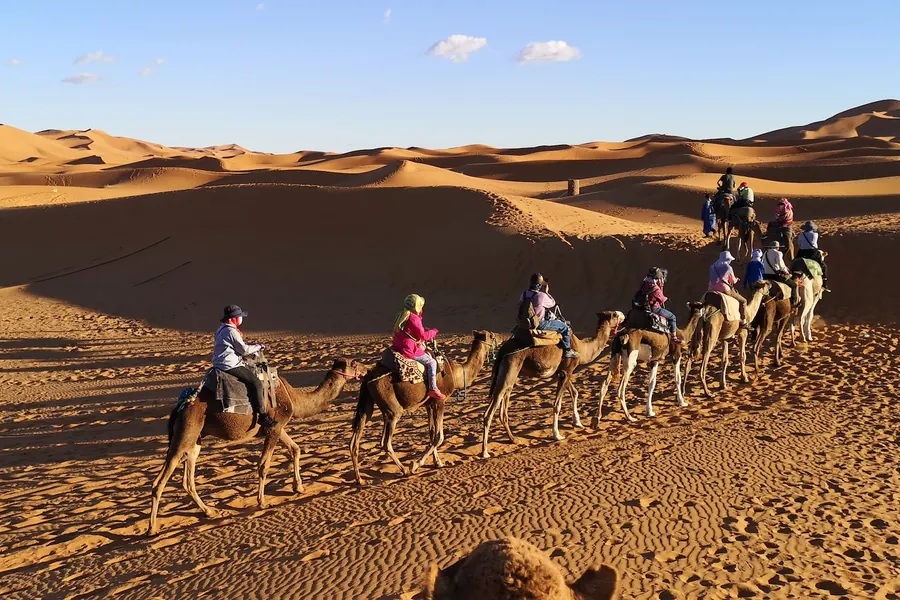 3-Day Marrakech to Merzouga Desert Tour3 Days / 2 Nights · Marrakech → Dades Valley → Merzouga → Drâa Valley
-
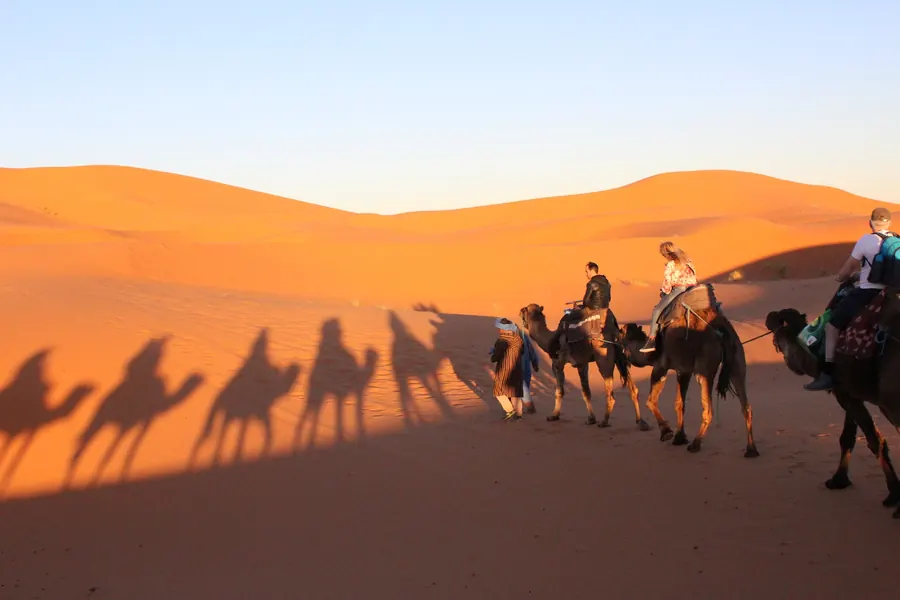 Overnight Camel Trek in Merzouga1 Night · Merzouga → Erg Chebbi
-
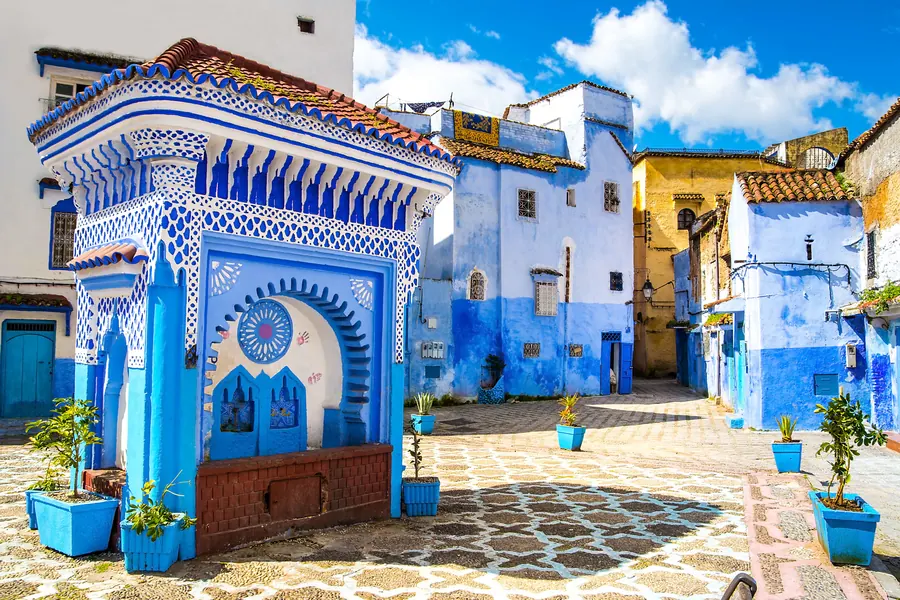 10-Day Morocco Tour from Casablanca via the Sahara Desert10 Days / 9 Nights · Casablanca → Chefchaouen → Fes → Merzouga → Marrakech

Written by the Desert Merzouga Tours teamLocal guides and drivers from the Moroccan Sahara. Meet our team or ask us a question.