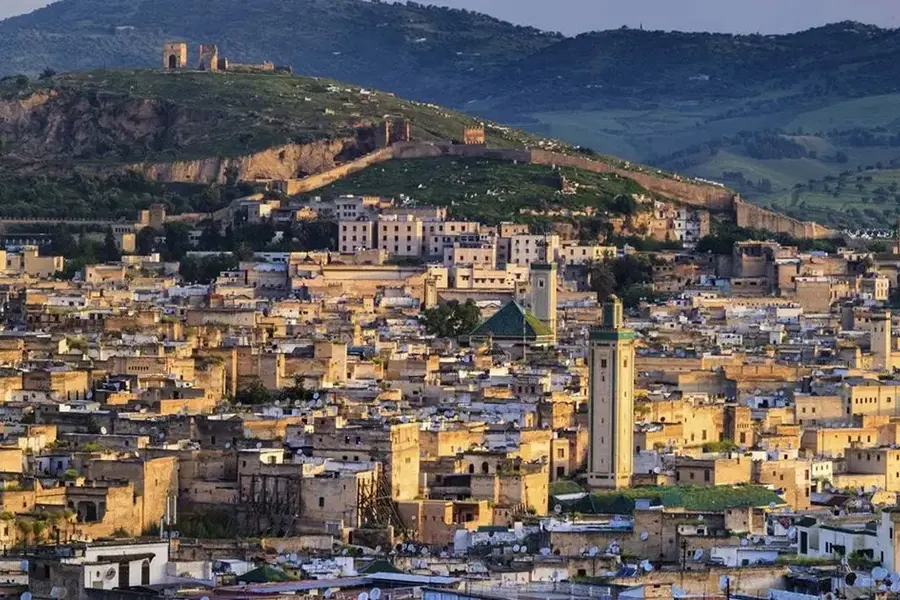
Fes is the oldest of Morocco's imperial cities and the one that has changed least. Its medina, Fes el-Bali, is a maze of some 9,000 lanes where goods still move by donkey and craftsmen work as their grandfathers did. It can feel overwhelming at first; this guide helps you find the places that matter.
1. A short history of Fes
Fes was founded at the end of the 8th century by Idris I and developed by his son Idris II, who made it the capital of the first Moroccan dynasty. Refugees from Andalusia and from Kairouan in Tunisia settled on opposite banks of the river, bringing the crafts and learning that made the city famous.
Under the Marinids in the 13th and 14th centuries, Fes reached its golden age, and most of the great madrasas date from then. Today the medina is a UNESCO World Heritage site and is often described as the largest car-free urban area in the world.
2. Understanding the three cities of Fes
Fes is three towns in one. Fes el-Bali is the original walled medina in the valley. Fes el-Jdid, 'new Fes', was added by the Marinids in 1276 to hold the royal palace, the barracks and later the Jewish quarter. The Ville Nouvelle, with its straight avenues and cafés, was built by the French in the 20th century.
Inside Fes el-Bali, two main streets, Talaa Kebira and Talaa Seghira, run downhill from Bab Boujloud to the Quaraouiyine at the bottom of the valley. If you remember that uphill leads back to the Blue Gate, you will never be lost for long.
3. The unmissable sights in the medina
The medina has hundreds of monuments, but seven places give you the essence of the city. A guide can link them in a single walk of three to four hours.
- Bab Boujloud: The 'Blue Gate', tiled in blue on one side and green on the other, and the main entrance to the medina.
- Bou Inania Madrasa: A 14th-century school with exquisite carved cedar, stucco and zellige tiles, and one of the few religious buildings open to non-Muslims.
- Al Quaraouiyine: Founded in 859 by Fatima al-Fihri and regarded as the oldest continuously operating university in the world. Non-Muslims can look in from the doorways.
- Attarine Madrasa: Small, intricate and right beside the spice market.
- Chouara Tannery: Leather is still dyed by hand in stone vats. View it from the terraces of the surrounding shops.
- Nejjarine Square: A beautiful fountain and a museum of wooden arts in a restored caravanserai.
- Seffarine Square: Coppersmiths hammering pots in the open air.

Local tip: At the tannery you will be offered a sprig of mint for the smell. Take it. Mornings are best, when the vats are full of colour.
4. Beyond the old medina
Most visitors never leave Fes el-Bali. These five places are outside it, and each shows a different face of the city.
- The Royal Palace gates: Seven golden doors in Fes el-Jdid, a favourite photo stop.
- The Mellah: The old Jewish quarter, with its balconied houses and historic cemetery.
- Borj Sud and Borj Nord: Two fortresses with the best panoramas over the medina.
- Marinid Tombs: Ruins on a hill above the city, wonderful at sunset.
- Jnan Sbil Gardens: A shady park between the two medinas.

5. A suggested two-day plan
On the first morning, walk the medina with a guide: Bab Boujloud, the Bou Inania, the souks, Nejjarine, the Quaraouiyine, Seffarine and the tannery. Have lunch in a courtyard restaurant, then spend the afternoon at your own pace, going back to the places that caught your eye. Watch the sunset from the Marinid Tombs.
On the second day, see the palace gates and the Mellah in Fes el-Jdid, stroll through the Jnan Sbil Gardens and visit a pottery workshop. Keep the afternoon for a hammam or a cooking class, or use the whole day for Meknes and Volubilis.
6. Crafts and food to look for
Fes is the craft capital of Morocco. Look for blue-and-white Fassi pottery, hand-cut zellige mosaics, leather goods, embroidered textiles and brass lanterns. A pottery workshop in the Ain Nokbi district shows how tiles are still cut by hand.
The city is also known for its cooking. Try pastilla, a sweet and savoury pie of pigeon or chicken with almonds, and the slow-cooked stews served in the old family houses that are now restaurants.
7. Where to stay and eat
Stay in a riad inside the medina if you can; waking to the sound of the city is part of Fes. Those near Bab Boujloud, Batha or R'cif are easiest to reach by taxi. Almost every riad has a roof terrace, and many cook dinner to order.
For street food, the stalls just inside Bab Boujloud grill kefta and serve bowls of bissara and harira. For a view, the rooftop cafés around the gate look down on the evening crowd.
8. Day trips from Fes
Fes is a good base for the north and the Middle Atlas. All of these can be reached and enjoyed in a day, except the last.
- Meknes and Volubilis: An imperial city and Morocco's finest Roman ruins, about an hour away.
- Moulay Idriss Zerhoun: A holy hill town beside Volubilis.
- Ifrane and Azrou: Cedar forests and Barbary macaques in the Middle Atlas.
- Chefchaouen: The blue town of the Rif, a long but rewarding day.
- Merzouga: The Sahara is a day's drive south, best visited over two or three days.
9. From Fes to the Sahara
Fes is the closest imperial city to the dunes. The road south takes seven to eight hours and is a journey in itself: the alpine town of Ifrane, the cedar forest and its monkeys, the bare plateau around Midelt and the long palm oasis of the Ziz Valley. Leave after breakfast and you can be on a camel in Erg Chebbi by sunset.
10. Practical tips
Fes is intense, and a little preparation helps you enjoy it rather than endure it.
- Hire a licensed guide for your first half-day. The medina has no street signs that help, and a guide saves hours.
- Wear shoes with grip: the lanes are steep and often wet.
- Friday is quiet, with many workshops closed.
- Listen for 'balak!': it means a loaded mule is coming through.
11. Dealing with unofficial guides
You will be approached by young men offering to show you the tannery or telling you a street is closed. It is rarely true. A calm 'no, thank you' and a steady walk is enough. Official guides carry a badge issued by the tourism ministry, and your riad can book one for you.
In Fes you do not look at history from behind a rope: you walk through it.
Frequently Asked Questions
How many days do I need in Fes?
Two full days is ideal: one for the medina with a guide, and one for the viewpoints, the Mellah and a workshop, or a day trip to Meknes and Volubilis.
Is Fes better than Marrakech?
They are very different. Fes is more traditional and intense; Marrakech is livelier and easier. If you can, see both, and travel between them through the desert.
Can non-Muslims enter the mosques in Fes?
No, but the madrasas, which are just as beautiful, are open to all visitors.
Is Fes safe to walk at night?
Yes on the main lanes, which stay busy until late. The side alleys empty early and are easy to get lost in, so ask your riad to send someone to meet you if you are returning after dinner.
When is the best time to visit Fes?
Spring and autumn. Summer afternoons are very hot in the medina, and winter can be cold and damp, though both seasons are quieter.
See It on One of Our Tours
-
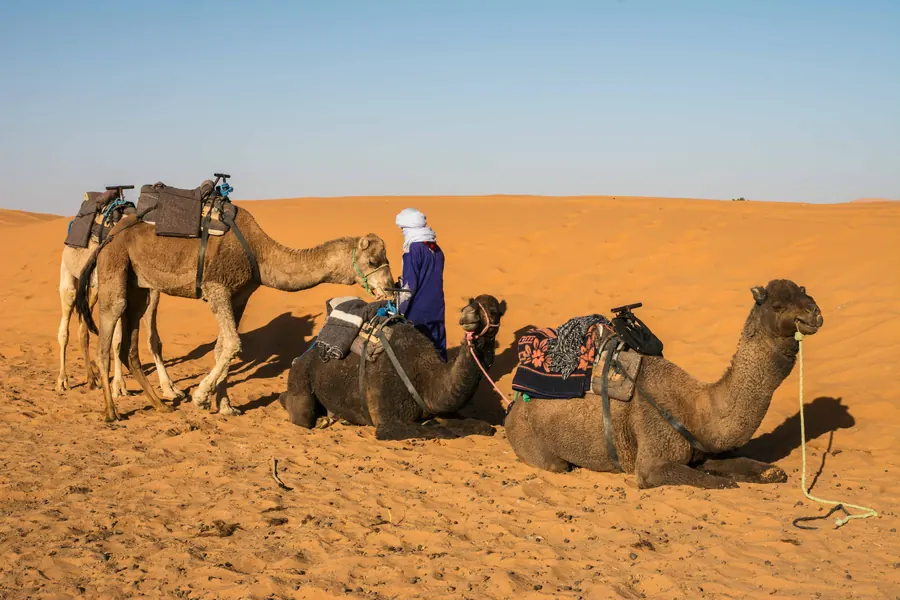 3-Day Fes to Merzouga Desert Tour3 Days / 2 Nights · Fes → Midelt → Merzouga → Fes
-
 3-Day Desert Tour from Fes to Marrakech via Merzouga3 Days / 2 Nights · Fes → Merzouga → Todra → Marrakech
-
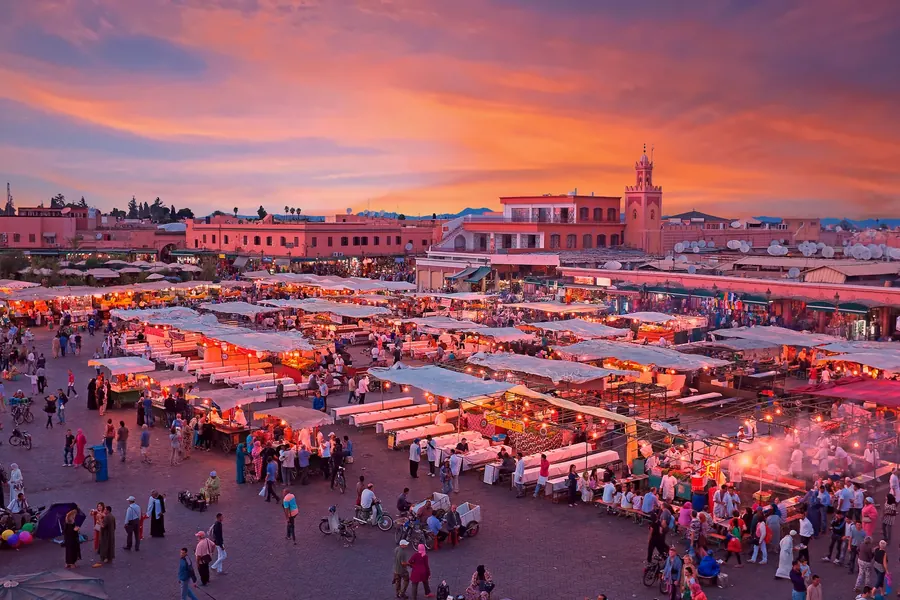 7-Day Morocco Tour from Casablanca: Imperial Cities7 Days / 6 Nights · Casablanca → Rabat → Fes → Ifrane → Marrakech

Written by the Desert Merzouga Tours teamLocal guides and drivers from the Moroccan Sahara. Meet our team or ask us a question.