Rabat is Morocco's capital, yet many travellers skip it. That is a mistake. It is green, calm and easy to explore, with an Atlantic kasbah, Roman and medieval ruins and some of the country's best museums. Its mix of old and new earned it UNESCO World Heritage status in 2012.
1. The top 10 sights in Rabat
Rabat's sights are spread along the river and the ocean, and you can see the main ones in a day without hurrying. These ten are listed roughly in the order you might visit them.
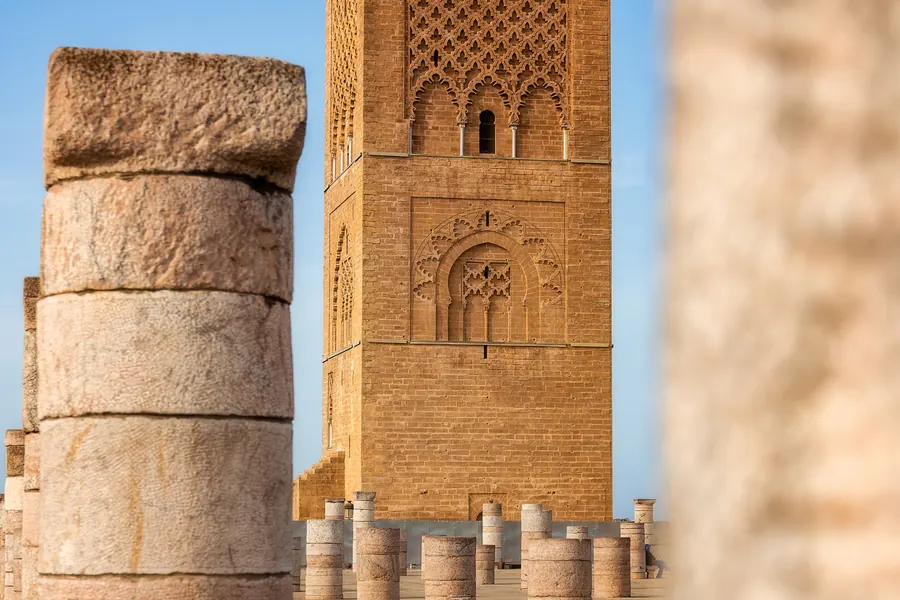
- Hassan Tower: The unfinished minaret of a vast 12th-century mosque begun by Sultan Yacoub al-Mansour. It stands 44 metres high among a field of stone columns.
- Mausoleum of Mohammed V: A richly decorated tomb opposite the tower, guarded by horsemen in ceremonial dress and open to visitors of all faiths.
- Kasbah of the Udayas: A fortress of white and blue lanes above the river mouth, with a grand Almohad gate.
- Andalusian Gardens: A peaceful garden inside the kasbah, planted with orange trees and bougainvillea.
- Chellah: A walled site where Roman ruins lie beneath a medieval necropolis, home to nesting storks.
- The medina: Smaller and calmer than those of Fes or Marrakech, with fair prices on Rue des Consuls.
- Royal Palace: The official residence of the king; the outer esplanade can be visited.
- Mohammed VI Museum of Modern and Contemporary Art: Moroccan art from the 20th century to today.
- Rabat beach and the Corniche: Surfers, fishermen and Atlantic sunsets.
- Salé: The twin city across the river, reached by tram or rowing boat, with an old medina of its own.

Local tip: Have a mint tea at the Café Maure in the kasbah. The terrace looks straight over the river to Salé.
2. The Kasbah of the Udayas up close
You enter through Bab Oudaia, a monumental Almohad gate of carved stone built at the end of the 12th century. Inside, a single main street runs between white houses with blue-painted bases to an open platform at the far end, high above the point where the Bou Regreg river meets the Atlantic.
The kasbah is still a residential neighbourhood, so keep your voice down and avoid photographing people's doorways while they are in them. The Andalusian Gardens and the café sit at the bottom, near the river.
3. Chellah in more detail
Chellah stands just outside the city walls, on the site of the Roman port of Sala Colonia. You can still make out the forum, a triumphal arch and the main paved street. In the 14th century the Marinid sultans enclosed the abandoned ruins within a wall and built their royal necropolis here, with a mosque, a madrasa and tombs.
An earthquake in the 18th century left it in romantic ruin. Today fig trees and flowers grow among the stones, storks clatter their beaks from nests on top of the minaret, and it is one of the most atmospheric places in Morocco.
4. A short history
Rabat began as a fortified monastery, or ribat, in the 12th century, when the Almohads planned a great capital here. After the death of Yacoub al-Mansour the project was abandoned, leaving the Hassan Tower unfinished.
In the 17th century, refugees expelled from Spain settled in the kasbah and ran a pirate republic from the river mouth. The French made Rabat the administrative capital in 1912, and it has remained the seat of government and the royal family since independence.

5. Museums and modern Rabat
Rabat has invested heavily in culture, and it shows.
- Museum of History and Civilisations: Home to the finest Roman bronzes found in Morocco, from Volubilis.
- Mohammed VI Museum of Modern and Contemporary Art: Opened in 2014, the first major museum of its kind in the country.
- The Ville Nouvelle: Wide avenues, arcades and Art Deco buildings from the 1920s, including St Peter's Cathedral.
- The Grand Theatre: A flowing white building on the riverbank, designed by Zaha Hadid.
- The Bou Regreg marina: Cafés and restaurants on the Salé side, with a view back to the kasbah.
6. How to spend one day in Rabat
Start at the Hassan Tower and the mausoleum while the light is soft, then drive or take a taxi to Chellah. After lunch in the medina, walk up through Rue des Consuls to the Kasbah of the Udayas and finish with the gardens and a sunset over the ocean.
With a second day, add the modern art museum, the city's wide French-era boulevards and a boat across to Salé.
7. Eating and shopping
For lunch, the medina has simple restaurants and stalls selling grilled fish, sandwiches and fresh juice, and the restaurants around the marina serve seafood with a view. Try a slice of pastilla or a plate of fried fish with tomato salad.
Rue des Consuls, once the street where foreign diplomats were required to live, is the best place to shop. It is known for the thick, formal Rabat carpet, with its central medallion, as well as leather and embroidery. Sellers here are relaxed, which makes it a pleasant place to practise bargaining.
8. Getting there and around
Rabat lies on the main railway line, about an hour from Casablanca and under two hours from Tangier by high-speed train. A modern tram links the main districts and Salé, and small blue taxis are inexpensive. The city is flat and pleasant to walk.
Rabat is one of the easiest Moroccan cities for an independent visitor. There is very little hassle, prices in the medina are marked more often than elsewhere, and taxi drivers use their meters.
9. Practical tips
- The mausoleum can close during official ceremonies, so visit it early in the day.
- The esplanade of the Hassan Tower is free to enter.
- Friday is a quiet day, and the medina is partly closed around midday.
- The climate is mild all year, cooler than Marrakech in summer and damp in winter.
- Bring a light jacket for the breeze at the kasbah.
10. Where Rabat fits in a Morocco trip
Rabat works well as a stop between Casablanca and Fes or the north. It is included on our longer itineraries from Casablanca, usually with a night in the city or a half-day visit on the way to Chefchaouen.
Frequently Asked Questions
Is Rabat worth visiting?
Yes. It has major monuments without the crowds and hassle of bigger tourist cities, and it shows a modern, everyday side of Morocco.
How long should I stay in Rabat?
One full day covers the main sights. Two days allow a slower pace and time for museums and Salé.
Can I visit the Mausoleum of Mohammed V?
Yes, it is open to non-Muslim visitors and entry is free. Dress respectfully.
Rabat or Casablanca: which should I visit?
If you have time for only one, Rabat has more to see and is more pleasant to walk. Casablanca's great sight is the Hassan II Mosque, which can be visited in a couple of hours on the way.
Is Rabat a good first stop after landing in Casablanca?
Yes. It is only about an hour from the airport by road, and it is a gentle introduction to Morocco before the bigger medinas.
See It on One of Our Tours
-
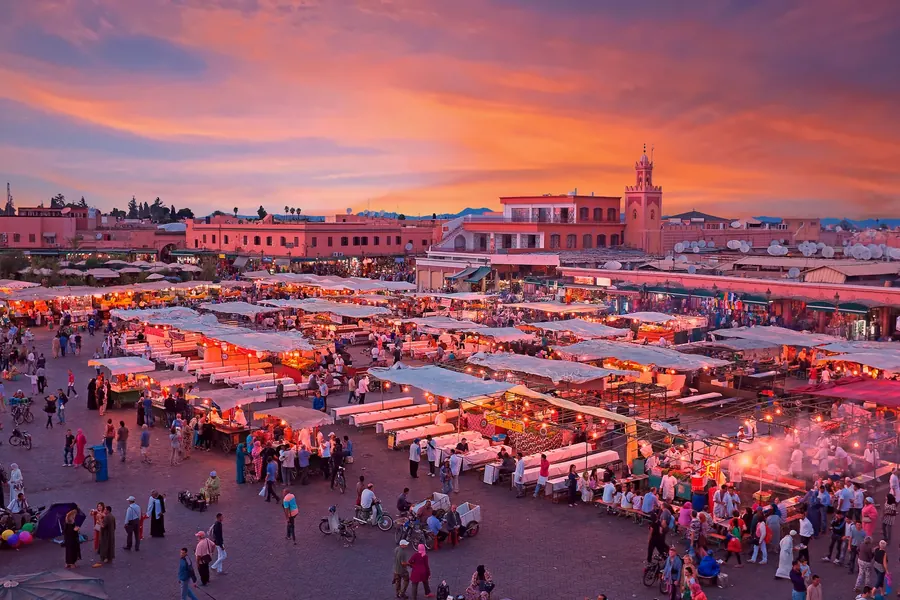 7-Day Morocco Tour from Casablanca: Imperial Cities7 Days / 6 Nights · Casablanca → Rabat → Fes → Ifrane → Marrakech
-
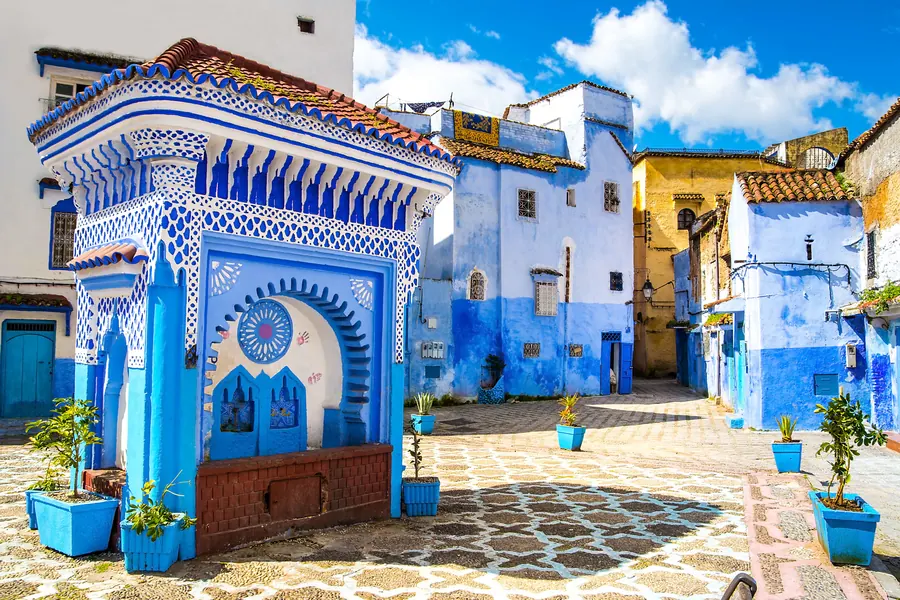 10-Day Morocco Tour from Casablanca via the Sahara Desert10 Days / 9 Nights · Casablanca → Chefchaouen → Fes → Merzouga → Marrakech
-
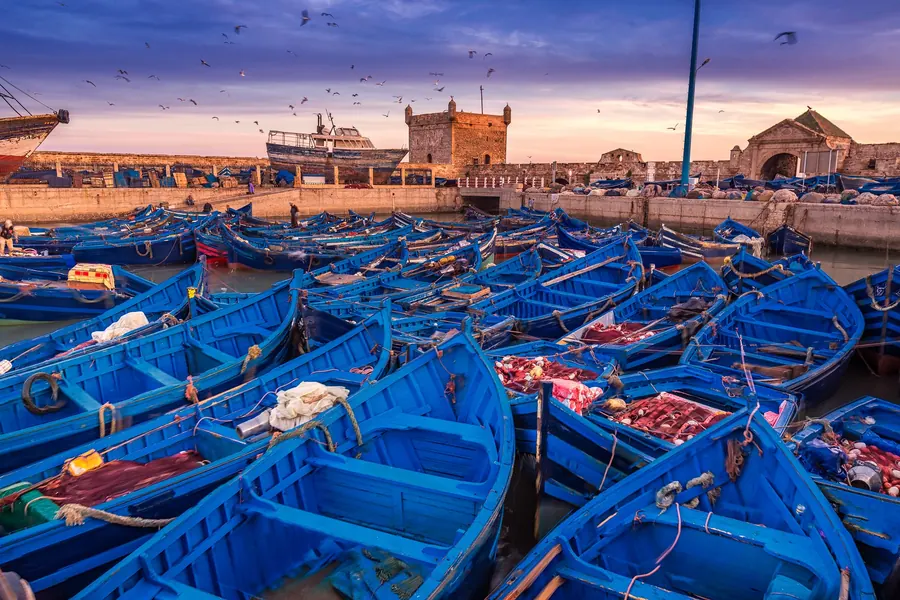 15-Day Morocco Tour from Casablanca15 Days / 14 Nights · Casablanca → Chefchaouen → Merzouga → Agadir → Essaouira → Marrakech

Written by the Desert Merzouga Tours teamLocal guides and drivers from the Moroccan Sahara. Meet our team or ask us a question.