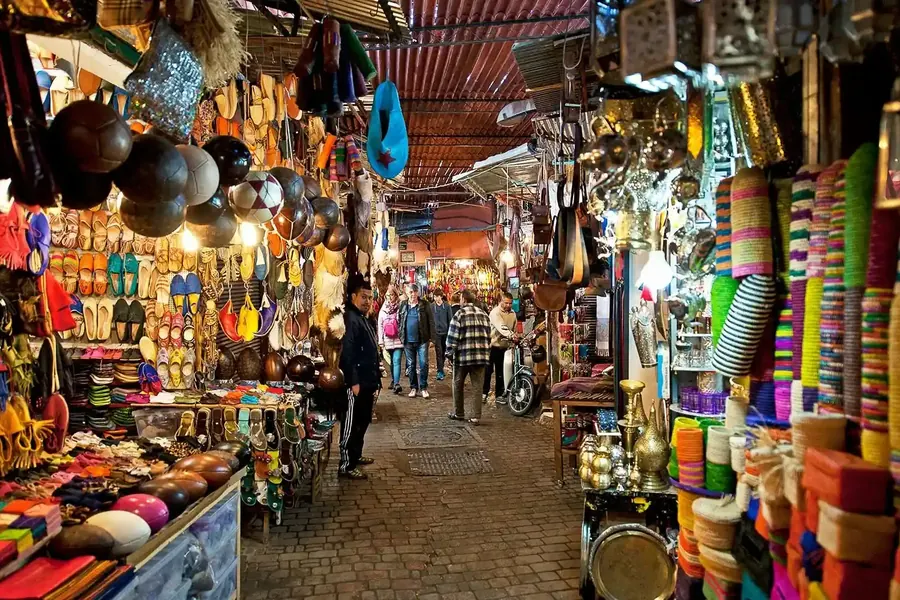
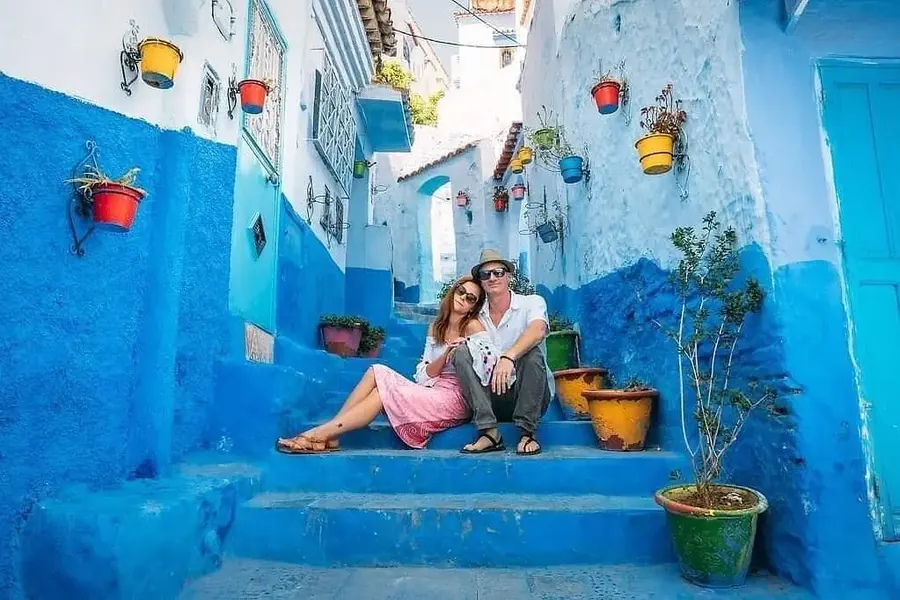
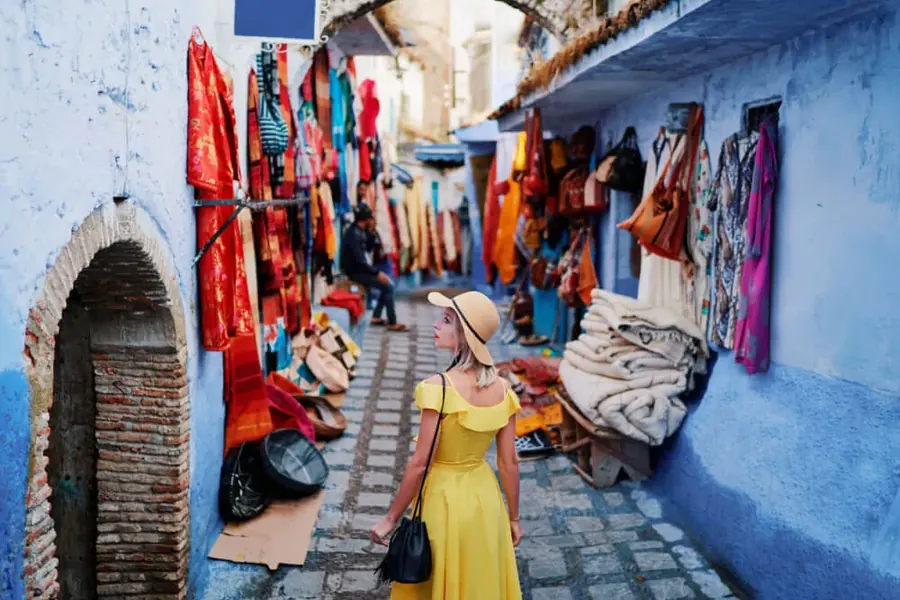
Packing for Morocco is a puzzle because one trip can include a hot medina, a snowy mountain pass and a freezing desert night. The answer is layers, not more luggage. This list is based on what our guests actually use, and what they tell us they wished they had brought.
1. How to dress in Morocco
Morocco is a relaxed country for visitors, and you will see every style of dress in the big cities. Still, modest clothing is appreciated, attracts less attention and is simply more comfortable in the sun.
For both men and women that means covering shoulders and knees in medinas and villages: loose trousers, long skirts, T-shirts and light shirts. Keep swimwear for the pool and the beach.
Local tip: A large, light scarf is the single most useful item. It covers shoulders, protects from sun and sand, and warms you in the evening.
2. What the weather really feels like
Morocco has several climates at once, and the difference between day and night can be greater than the difference between seasons.
- Marrakech and Fes in summer: Very hot afternoons, often above 35°C, with warm nights.
- Marrakech and Fes in winter: Sunny days around 18 to 20°C and cold nights, often below 8°C.
- The Atlas passes: Cool all year; snow is possible from November to April.
- The desert in winter: Pleasant, sunny days and nights close to freezing.
- The desert in summer: Afternoons above 40°C; mornings and evenings are the time to be outside.
- The Atlantic coast: Mild all year, and often windy.
3. The essentials for every season
Whatever the month, these eight things earn their place in your bag.
- Comfortable walking shoes: Medina streets are uneven and you will walk a lot.
- Sandals: For riads, hammams and the evening.
- Light layers: T-shirts, a long-sleeved shirt and a fleece or jumper.
- Sun protection: Sunglasses, a hat and high-factor sunscreen.
- A small daypack: For water, camera and a scarf.
- Reusable water bottle: Many riads and camps offer refills.
- Power adapter: Morocco uses European two-pin plugs (types C and E), 220 volts.
- Basic medicines: Something for the stomach, rehydration salts and any personal prescriptions.
4. A sample packing list for one week
- 3 to 4 T-shirts or light tops
- 2 long-sleeved shirts
- 2 pairs of loose trousers, or a long skirt and trousers
- 1 warm jumper or fleece, and a jacket to suit the season
- Underwear and socks for 5 days, since laundry is easy
- Walking shoes and sandals
- A scarf, a hat and sunglasses
- Swimwear, for pools and hammams
- Sleepwear that is warm enough for an unheated room in winter
5. What to add for each season
Then adjust for the time of year. The same suitcase does not work in July and in January.
- Spring and autumn: A light jacket for the evening and a rain layer for the north.
- Summer: Breathable cotton or linen, and little else. Avoid synthetic fabrics.
- Winter: A proper warm jacket, hat and gloves. Riads are often unheated, and desert nights are cold.
6. Packing for the desert
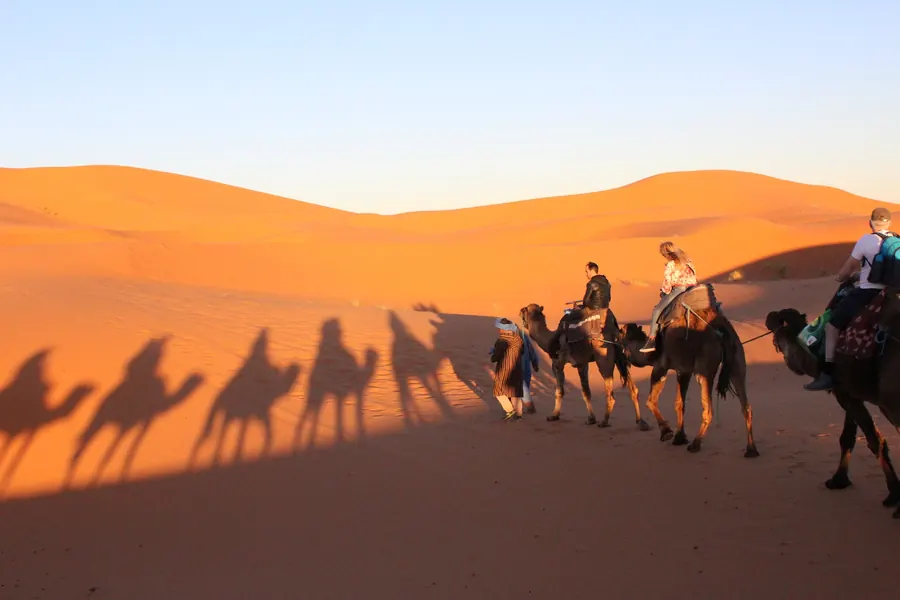
For a night in the Sahara you only need a small bag; your suitcase stays at the guesthouse or in the vehicle. Take closed shoes or trainers for the sand, long trousers for the camel ride, a warm layer for the night and a headlamp or phone torch.
Sand gets everywhere, so a zip bag for your phone and camera is worth having. Camps provide bedding and towels, and most have somewhere to charge a phone.
Local tip: Do not buy a turban in advance. Your guide will show you how to tie one, and they are cheap in any souk.
7. Toiletries and health kit
- Sunscreen and lip balm with sun protection
- Hand gel and a packet of tissues
- Moisturiser: the air in the south is very dry
- Insect repellent for summer evenings in the oases
- Eye drops and spare contact lenses if you wear them, as sand and dust irritate
- Plasters for blisters
- Any prescription medicine, in its original packaging
8. Electronics and photography
- A power bank: Useful on long driving days and in camp.
- A plug adapter, and a small multi-socket if you have several devices.
- Spare memory cards and batteries: You will take more photos than you expect.
- A soft cloth and a sealable bag to keep sand out of lenses.
- Offline maps and a translation app, downloaded before you leave.
9. What to leave at home
Most people bring too much. These are the things that come back unused, or do not make it past customs.
- Too many clothes: Laundry is easy and inexpensive in most riads.
- High heels: Cobblestones make them useless.
- Drones: They are not allowed in Morocco without a permit and may be confiscated at the airport.
- Valuables you would hate to lose: Keep it simple.
10. Suitcase or backpack?
Either works. A soft bag or a medium suitcase is easier than a large hard case, because riads have narrow stairs and no lifts, and medina lanes are cobbled. Whatever you choose, add a small daypack or overnight bag for the desert. And leave some space: almost everyone goes home with a rug, a lantern or a bag of spices.
11. Documents and money
Bring your passport, with at least six months' validity recommended, and check visa rules for your nationality before you travel. Keep a photo of your passport on your phone.
The dirham is the local currency and cash is still king in souks, taxis and small restaurants. Bring a debit card for ATMs and a small amount of euros or dollars as a backup.
Frequently Asked Questions
Can women wear shorts in Morocco?
In beach resorts and hotels, yes. In medinas and rural areas, knee-length or longer clothing is more respectful and will make you feel more at ease.
Do I need hiking boots?
Only if you plan to trek in the Atlas. For cities, gorges and the desert, good trainers are enough.
Is there a luggage limit on desert tours?
There is no strict limit in a private vehicle, but soft bags are easier to load than large hard suitcases.
Do I need a sleeping bag for the desert camp?
No. Camps provide proper beds with sheets and thick blankets. In winter, thermal layers to sleep in are a good idea.
Can I do laundry during the trip?
Yes. Most riads and hotels offer a laundry service, usually returned the next day, so there is no need to pack for every day.
See It on One of Our Tours

Written by the Desert Merzouga Tours teamLocal guides and drivers from the Moroccan Sahara. Meet our team or ask us a question.