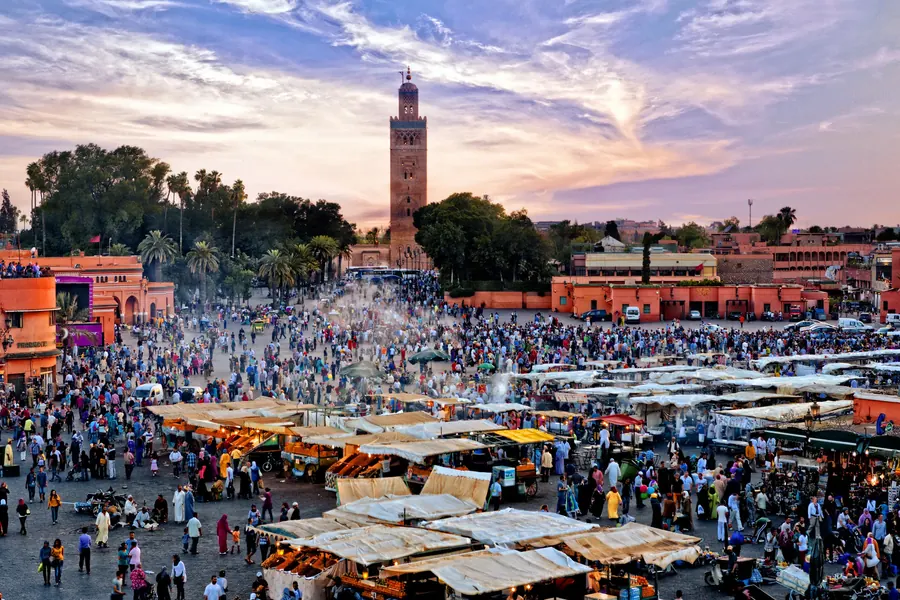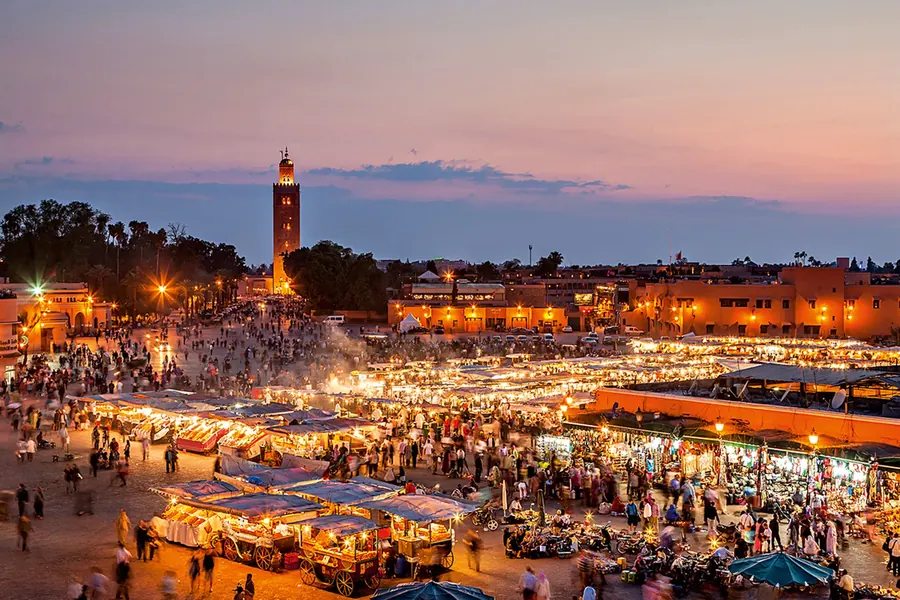
Every visit to Marrakech begins and ends at Jemaa el-Fna. By day it is a wide, sun-baked square of juice stalls and snake charmers; at dusk it turns into an open-air theatre and restaurant that has run every night for centuries.
1. A square with a thousand years of history
Jemaa el-Fna has been the centre of Marrakech since the city was founded by the Almoravids in the 11th century. It served as a market, a meeting place and, at darker moments, a place of public execution.
What makes it unique is its living tradition of storytellers, musicians, healers and performers. UNESCO recognised this in 2001, when the square became one of the first places in the world named a masterpiece of the oral and intangible heritage of humanity.

2. What does the name mean?
Nobody is quite sure. The most quoted translation is 'assembly of the dead', a reference to the executions once carried out here. Another reading is 'the mosque of nothing', linked to a great mosque that a Saadian sultan began beside the square and never completed. Marrakchis simply call it 'la place'.
3. The square by day
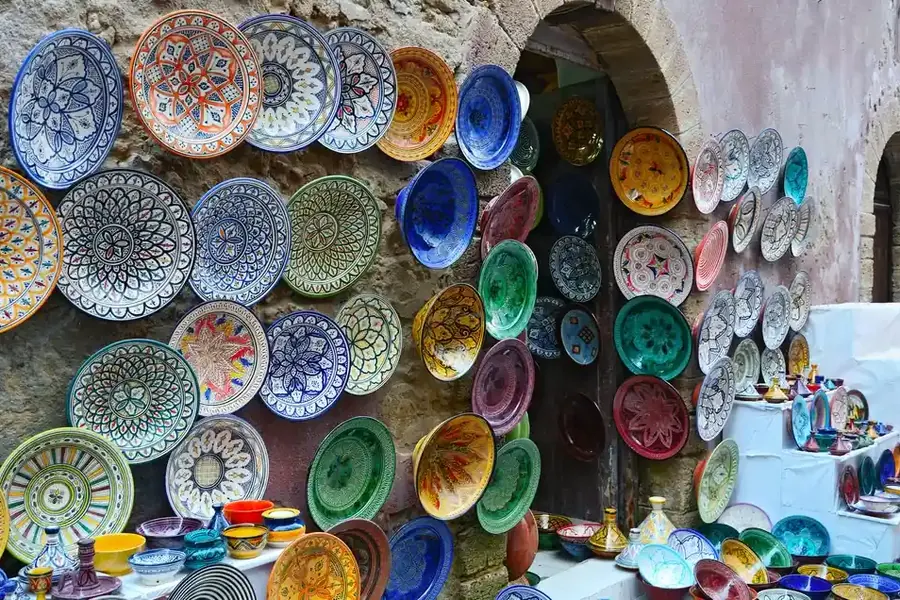
In the morning the square is calm. Carts sell freshly squeezed orange juice, women offer henna tattoos, and snake charmers and men with monkeys wait for photographs. Around the edges, the souks begin: a covered maze of spices, leather, lanterns and carpets that stretches north for almost a kilometre.
Local tip: We suggest not paying for photos with monkeys or snakes. The animals are kept in poor conditions, and the trade continues only because visitors pay.
4. The performers and their circles
Each performance takes place inside a ring of spectators called a halqa. The tradition is centuries old, and several of its arts are now rare.
- Storytellers: Once the stars of the square, reciting epics in Arabic or Tamazight. Only a few remain.
- Gnawa musicians: In cowrie-shell caps, playing iron castanets and spinning the tassels on their hats.
- Acrobats: Tumblers in red and green who build human pyramids.
- Water sellers: In red costumes hung with brass cups. Today they earn their living from photographs.
- Herbalists and healers: Selling roots, powders and remedies for every complaint.
- Henna artists: Agree the design and the price first, and ask for natural brown henna.
5. The square by night
As the sun sets behind the Koutoubia minaret, a hundred food stalls are assembled in minutes, each with its own number, benches and clouds of smoke. Circles form around Gnawa musicians, acrobats and storytellers, and the noise builds until late.
This is the moment to be here. Walk through slowly, stop where a crowd has gathered and leave a few coins if you stay to watch.

6. Into the souks from the square
The main entrance to the souks is on the north side. Souk Semmarine, the widest alley, leads past textiles and slippers to Rahba Kedima, the old spice square, where baskets, herbs and carpets are sold.
Further in, the trades have their own quarters: the dyers with skeins of wool drying overhead, the blacksmiths hammering lanterns, the leather workers and the slipper makers. Getting lost is normal; walk downhill and follow the crowd and you will find the square again.
Local tip: Go into the souks in the morning, when the lanes are quieter and shopkeepers have more time to talk.
7. What to eat at the food stalls
Eating on the square is part of the experience, and it is cheaper than most restaurants. Stalls display their menus and prices, and the cooks work in full view.
- Harira: A warming tomato, lentil and chickpea soup.
- Grilled meats: Skewers of lamb and chicken, and spicy merguez sausages.
- Fried fish and calamari: Served with bread and tomato salsa.
- Snail soup: A peppery broth sold from small carts; more a tonic than a meal.
- Tangia: The slow-cooked meat dish of Marrakech.
- Orange juice and spiced tea: For afterwards.
Local tip: Choose a busy stall where locals are eating, and check the price list before you sit down.
8. The best views
Several cafés around the square have roof terraces. Go up half an hour before sunset, order a drink and watch the transformation from above, with the Koutoubia and, on clear days, the Atlas behind.
Terraces fill quickly, and most cafés expect each person to order something. From above you can see how the square is organised: juice carts in a row, food stalls in a tight grid, and the circles of onlookers forming and dissolving around each performer.
9. What else is nearby
The square is the natural starting point for the rest of the medina, and the main sights are a short walk away.
- Koutoubia Mosque: The 12th-century minaret, 77 metres high, that sets the skyline of the city.
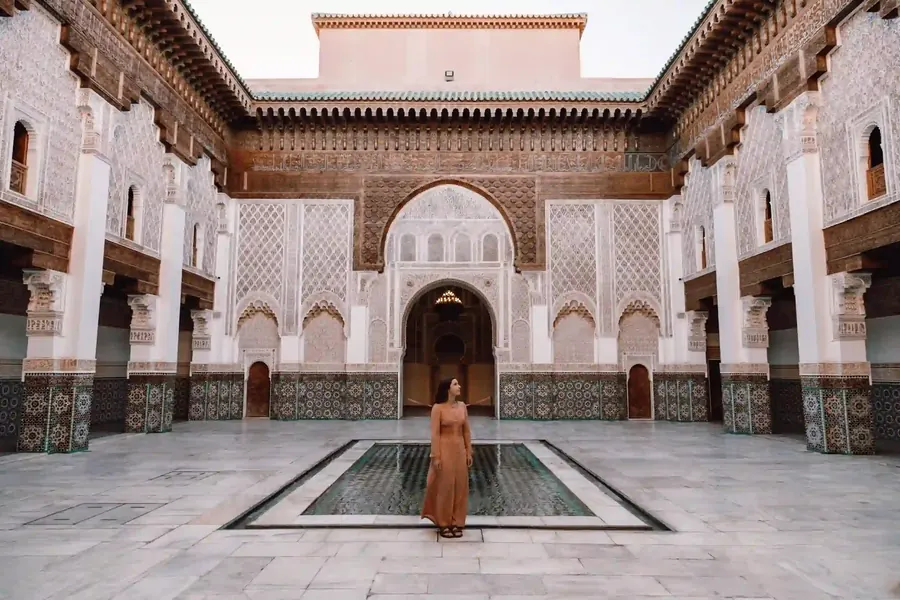
- Bahia Palace: About fifteen minutes on foot, with painted ceilings and quiet courtyards.
- Saadian Tombs: The richly decorated royal burial ground rediscovered in 1917.
- The Mellah: The old Jewish quarter, with its spice market and synagogue.
- Le Jardin Secret: A restored garden in the middle of the souks.
10. Tips for enjoying the square
The square is good-natured, but it is also busy and everyone is selling something. A few habits make it more enjoyable.
- Keep your phone and wallet in a front pocket in the evening crowds.
- Agree a price before henna, photos or any service.
- A firm, friendly 'la, shukran' (no, thank you) works with persistent sellers.
- Carry small change for performers.
You have not seen Marrakech until you have seen the square at dusk.
Frequently Asked Questions
Is Jemaa el-Fna safe at night?
Yes. It is busy with families and visitors until late. As in any crowd, keep an eye on your belongings.
What time is best to visit?
Come twice: once in the morning to see it quiet, and again from an hour before sunset to see it come alive.
How far is the Koutoubia Mosque?
A five-minute walk. Non-Muslims cannot enter, but the gardens around the minaret are open to everyone.
Is there an entrance fee for Jemaa el-Fna?
No. The square is a public space and is free at any hour. You pay only for what you eat, drink or choose to give the performers.
Can I take photographs on the square?
Photos of the general scene are fine. Performers, water sellers and henna artists expect a few dirhams if you photograph them, so agree before you raise the camera.
See It on One of Our Tours

Written by the Desert Merzouga Tours teamLocal guides and drivers from the Moroccan Sahara. Meet our team or ask us a question.