Merzouga is a small village in south-east Morocco that sits at the foot of Erg Chebbi, the most famous sea of sand in the country. We were born here, and this is the guide we give our own friends before they visit: what the desert is really like, when to come and how to make the most of your time.
1. Where is Merzouga and what is Erg Chebbi?
Merzouga lies in the Drâa-Tafilalet region, about 50 km south of Erfoud and close to the Algerian border. The village itself is modest: a main street, guesthouses, a few shops and cafés. What draws travellers is the wall of orange dunes that rises directly behind it.
That wall is Erg Chebbi, a field of wind-blown sand roughly 22 km long and 5 km wide. Its highest dunes reach around 150 metres, the tallest in Morocco. An erg is a true sand desert, which is rare here: most of the Moroccan Sahara is hamada, a flat plain of stone and gravel. That contrast, black rock on one side and soft golden sand on the other, is part of what makes Merzouga so striking.

2. The people of Merzouga
The families of Merzouga and the neighbouring village of Hassi Labied are Amazigh, most of them from the Aït Khebbach tribe, who were nomadic herders until a generation or two ago. Many of our own relatives grew up in tents on the plain behind the dunes, moving with their goats and camels.
A few families still live that way, and others spend part of the year on the move. A short drive away, the people of Khamlia are descendants of men and women brought across the Sahara centuries ago, and their Gnawa music is unlike anything else in Morocco. Hospitality here is not a performance: if you are offered tea, you are truly welcome.
3. The best time to visit Merzouga
You can visit all year, but the seasons feel very different.
- Spring (March to May): Warm days, mild nights and clear skies. The most comfortable season, and the busiest around Easter.
- Autumn (late September to November): Similar to spring, with soft light and pleasant evenings around the fire.
- Winter (December to February): Sunny, quiet days of around 15 to 20°C, but nights can fall close to freezing. Bring warm layers, or choose a camp with heating.
- Summer (June to August): Afternoon temperatures often pass 40°C. Trips still run, with camel rides at sunrise and sunset and long rests in the shade.
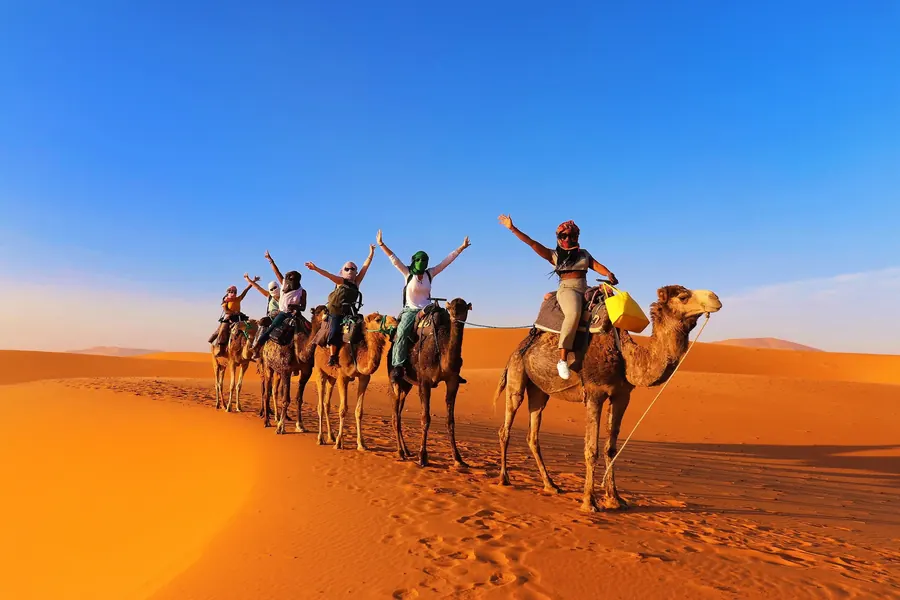
Local tip: Sandstorms are most likely in spring. They usually pass within a few hours; a scarf wrapped as a turban is the best protection.
4. Things to do in the Merzouga desert
Most visitors come for one night and wish they had stayed two. Beyond the classic camel ride, there is a surprising amount to see around the dunes.
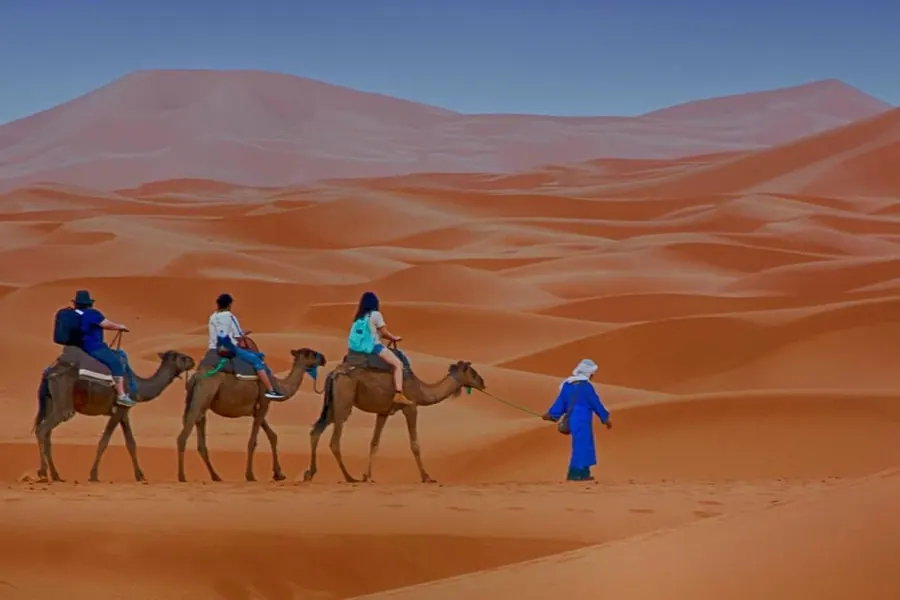
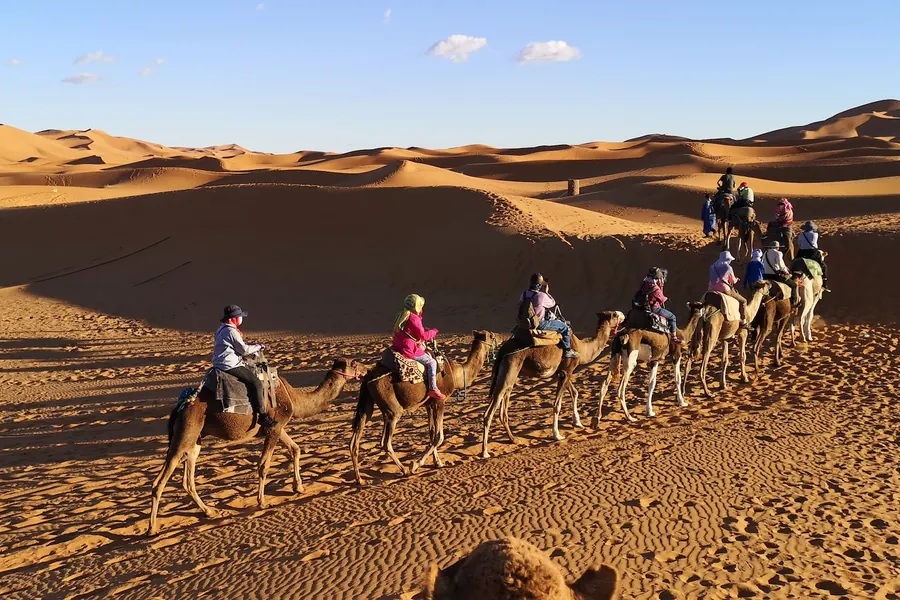
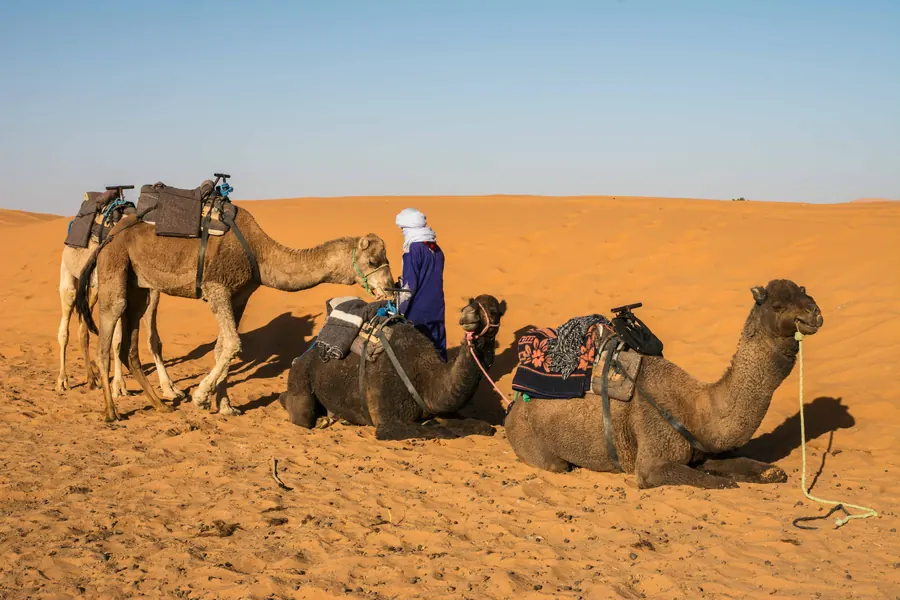
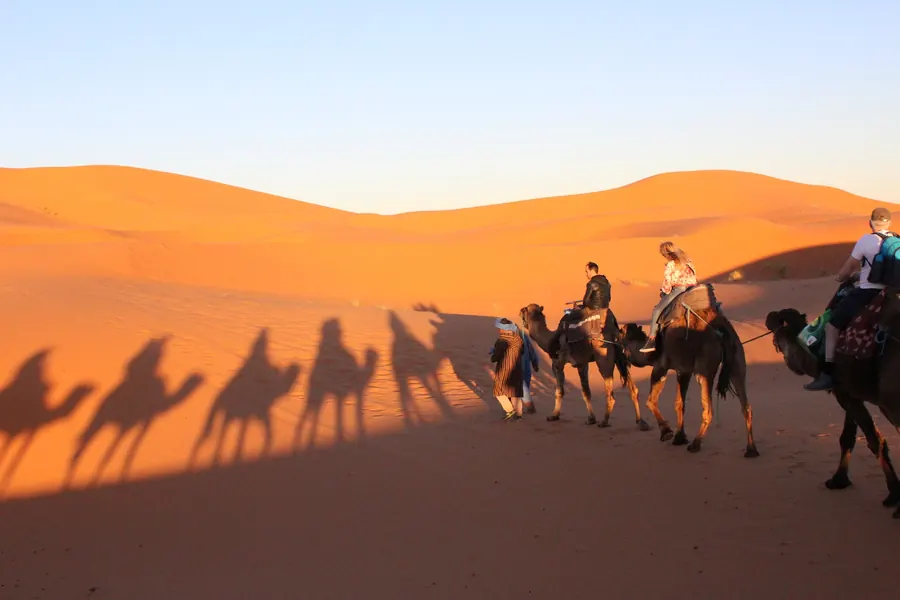
- Camel trekking: A ride of about an hour and a half into the dunes at sunset, returning after sunrise.
- A night in a desert camp: Dinner, drums around the fire and a sky full of stars.
- Sandboarding: Boards are available at camp for sliding down the steeper dunes.
- 4x4 excursion: A loop around Erg Chebbi to the Hassi Labied oasis, the M'ifis mines and nomad camps.
- Gnawa music in Khamlia: A village whose musicians keep a tradition brought from sub-Saharan Africa.
- Dayet Srij lake: A seasonal lake that attracts flamingos after the rains.
- Quad biking: For those who prefer speed to silence.

5. A night in the desert, hour by hour
Times shift with the season, but the rhythm of the classic overnight trip is always the same.
- Mid-afternoon: Arrive in Merzouga, leave your main luggage and have a glass of tea.
- About two hours before sunset: Mount your camel and ride into the dunes.
- Sunset: Climb a high dune on foot and watch the sand change from gold to pink.
- Evening: Arrive at camp, settle into your tent, then dinner and music by the fire.
- Night: Stargazing, in a silence most visitors have never heard before.
- Dawn: Wake early for the sunrise, have breakfast and return to the village by camel or 4x4.
6. Where you sleep: desert camps explained
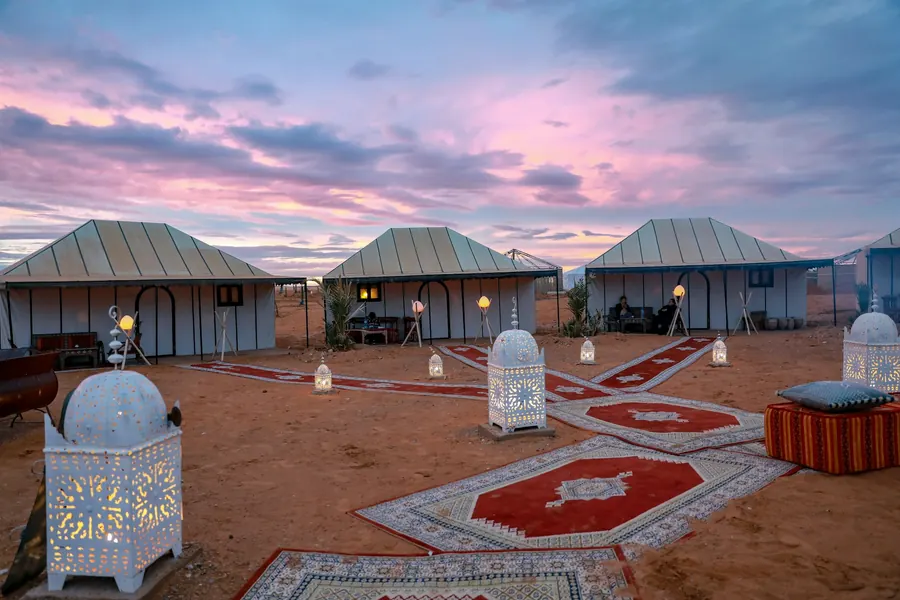
Desert camps sit among the dunes, away from the village. Tents are private and furnished with real beds, and the better camps have en-suite bathrooms with hot showers. Luxury camps add air conditioning and heating, which makes a real difference in July or January.
Evenings follow a pleasant rhythm: mint tea on arrival, a dinner of soup, tagine and fruit, then music around the campfire. Electricity usually comes from solar panels, and phone signal is weak, which most guests end up enjoying.
Local tip: Walk five minutes away from the camp lights after dinner. With no towns nearby, you can see the Milky Way with the naked eye.
7. Wildlife and the night sky
The dunes look empty, but the sand is covered in tracks each morning: beetles, lizards, jerboas and, occasionally, the small desert fox known as the fennec. Birdwatchers come for desert sparrows and larks, and for the flamingos and ducks that gather on Dayet Srij when it holds water.
For stars, the phase of the moon matters. Around the new moon the sky is at its darkest and the Milky Way is clearest. At full moon you lose the faint stars, but the dunes glow silver and you can walk without a torch.
8. How to get to Merzouga
Merzouga is about 560 km from Marrakech and 460 km from Fes. From Marrakech the journey is best split over two days, with a night in the Dades Valley; from Fes it can be done in one long day through the Middle Atlas and the Ziz Valley.
Supratours buses run daily from both cities, and the roads are paved all the way if you are driving yourself. Many travellers choose a private tour, which turns the long drive into part of the trip, with stops at Aït Benhaddou, the Todra Gorge and the palm groves along the way.
9. Rissani and Erfoud: the towns on the way
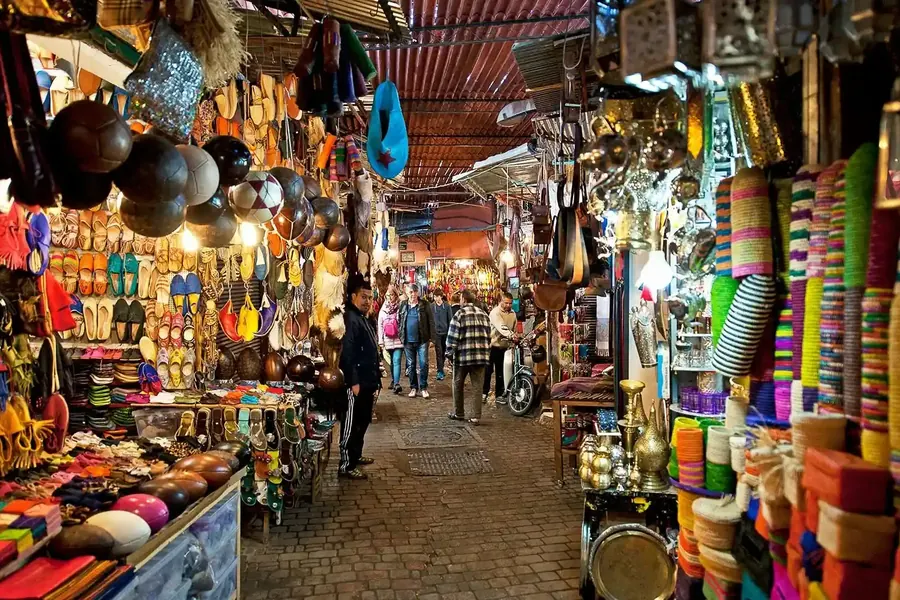
Rissani, 35 km before Merzouga, was once Sijilmassa, the great trading city where caravans from Timbuktu unloaded gold and salt. It is also the cradle of the Alaouite dynasty, which still rules Morocco. Its market, held on Sundays, Tuesdays and Thursdays, is the most authentic in the region, complete with a 'car park' for donkeys.
Erfoud is known for dates and for fossils. The black stone quarried nearby is full of creatures that lived in a sea here hundreds of millions of years ago, and workshops polish it into tables, basins and plates.
10. Sand baths: a summer tradition
In July and August, when foreign visitors are few, Moroccans come to Merzouga for sand baths. People are buried up to the neck in hot sand for a few minutes, then wrapped in blankets and given tea. It is a traditional treatment for rheumatism and joint pain, and it only works in the fierce heat of midsummer.
11. Practical tips before you go
- Money: Bring cash. ATMs are few in Merzouga; Erfoud and Rissani are more reliable.
- Clothing: Light layers for the day, something warm for the night, and closed shoes for the sand.
- Luggage: Take a small bag to camp and leave your suitcase at the guesthouse or in the vehicle.
- Water and sun: Drink more than you think you need, and use sunscreen even in winter.
- Respect: Ask before photographing people, especially nomad families.
The desert teaches you to slow down: there is nothing to do but watch the light change.
Frequently Asked Questions
How many days do I need in Merzouga?
One night is enough for a camel trek and a camp experience. Two nights let you add a 4x4 day around the dunes, with Khamlia, the oasis and a nomad family visit.
Is Merzouga better than Zagora?
Merzouga has much higher dunes and feels like the Sahara of the films. Zagora is closer to Marrakech and suits a two-day trip, but its dunes are small.
Is it safe to visit the Merzouga desert?
Yes. Merzouga is a calm, welcoming area that has received travellers for decades. The main risks are sun, heat and dehydration, which are easy to manage with sensible preparation.
Is Merzouga suitable for children?
Yes. Children love the camels, the sandboarding and the freedom of the dunes. For young children, choose a 4x4 transfer or a short ride, and avoid the hottest months.
Can I visit the dunes without riding a camel?
Of course. A 4x4 can take you to camp in about twenty minutes, and you can still climb the dunes on foot for sunset and sunrise.
See It on One of Our Tours

Written by the Desert Merzouga Tours teamLocal guides and drivers from the Moroccan Sahara. Meet our team or ask us a question.