Essaouira is where Moroccans go to breathe. A white-walled port on the Atlantic, about three hours west of Marrakech, it has ramparts lined with cannons, a harbour full of blue boats and a steady sea breeze that keeps it cool when the rest of the country bakes.
1. Why visit Essaouira
Formerly known as Mogador, the town was laid out in the 1760s for Sultan Mohammed ben Abdallah by a French engineer, Théodore Cornut, who gave it unusually straight streets and strong sea defences. The medina has been a UNESCO World Heritage site since 2001.
Its atmosphere is its greatest attraction. The medina is compact, traders are relaxed and the light, the gulls and the sound of the sea make it a place to slow down. Musicians and artists have been drawn here since the 1960s.

2. A little more history
Long before the present town, Phoenician sailors traded here, and under the Berber king Juba II, around the time of Christ, workshops on the islands in the bay produced the purple dye used for the robes of Roman senators. The Portuguese built a fort in 1506 and held it only briefly.
The 18th-century port became Morocco's main link with Europe and the end point of caravans from Timbuktu. The sultan invited Jewish merchants to run its trade, and for a time they made up a large part of the population. In the 20th century came film crews and musicians: Orson Welles shot his 'Othello' on the ramparts, and Jimi Hendrix spent a few days here in 1969, a visit the town has never forgotten.
3. The best things to do
Essaouira is small, and everything is within a fifteen-minute walk. There is no need to plan much: these are the things worth making time for.
- Walk the Skala de la Ville: The sea bastion, with its row of old cannons and views over the waves.
- Visit the fishing harbour: Blue wooden boats, nets, gulls and the day's catch being sold on the quay.
- Wander the medina: Art galleries, spice stalls and cafés in whitewashed lanes with blue shutters.
- See the thuya woodworkers: Craftsmen carve boxes and tables from the scented root of the local thuya tree.
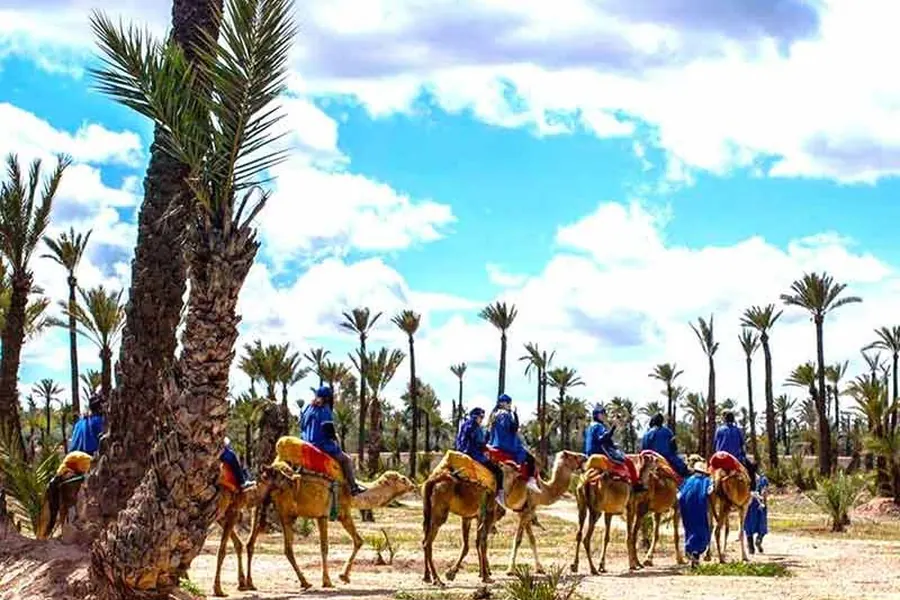
- Relax on the beach: A long, wide bay, popular for walking, horse and camel rides.
- Try wind sports: Steady trade winds make this one of Morocco's best spots for kitesurfing and windsurfing.
- Visit the Mellah: The old Jewish quarter and its restored synagogues recall the town's trading past.

Local tip: Climb the Skala du Port in the late afternoon. The view of the ramparts with the islands behind is the classic photograph of Essaouira.
4. A perfect day in Essaouira
Begin at the harbour while the boats are unloading, then walk through the Bab el-Marsa gate and up onto the Skala du Port. Follow the main street into the medina, turning off into the side lanes for the galleries and the woodworkers' workshops under the ramparts.
Have grilled fish for lunch, then walk it off along the beach as far as you like. Return for the Skala de la Ville an hour before sunset, when the light turns the walls gold and the waves break on the rocks below. Finish with dinner in the medina, where you may hear Gnawa musicians play.
5. What to eat
Seafood is the reason to come hungry. At the grills by the harbour you choose your fish, agree the price and have it cooked in front of you. Sardines, sea bream, calamari and prawns are the staples. In the medina, small restaurants serve fish tagine and seafood pastilla.
Ask the price per plate or per kilo before the fish goes on the grill, as it is not always displayed. For something sweet afterwards, the cafés on the main square, Place Moulay Hassan, are the place to sit with a coffee and watch the town go by.
6. Argan country
The road from Marrakech passes through the only region in the world where argan trees grow wild. Women's cooperatives along the way show how the nuts are cracked and pressed for cooking and cosmetic oil, and you may see goats that climb into the branches to eat the fruit.
7. The island and its falcons
The island of Mogador, just offshore, is a nature reserve and the breeding ground of the Eleonora's falcon, a rare bird of prey that arrives from Madagascar each spring and stays until autumn. Landing is not allowed without a permit, but you can watch the falcons hunting over the bay in the evening, and boat trips circle the island in calm weather.
8. Beaches and villages nearby
- Diabat: A village just across the river mouth, with the ruins of an old palace half buried in sand.
- Sidi Kaouki: A long, wild beach about 25 km south, popular with surfers and almost empty out of season.
- Moulay Bouzerktoun: A windswept point to the north, known to experienced windsurfers.
- The argan cooperatives: Several lie on the roads out of town and welcome visitors.
9. When to go
Essaouira is mild all year. Summer is cool and breezy, which is exactly why it is busy in July and August. The wind is strongest from April to September; spring and autumn offer calmer days. In late June the Gnaoua World Music Festival fills the town with concerts.
10. How to get there
Essaouira is about 190 km from Marrakech, a drive of two and a half to three hours, and about the same from Agadir. Supratours and CTM buses run several times a day. It works as a long day trip from Marrakech, but a night or two is far better.
11. Where to stay
Riads inside the medina put you close to everything, and many have roof terraces with a view of the sea. Cars cannot enter the walls, so porters with handcarts wait at the gates to carry luggage. Hotels along the beach are easier to reach by car and have more space, at the cost of a ten-minute walk into town.
Essaouira does not ask you to do anything. That is its charm.
Frequently Asked Questions
Is one day enough for Essaouira?
A day trip shows you the ramparts, harbour and medina. Staying overnight lets you enjoy the evening light and the town after the day visitors leave.
Can you swim in Essaouira?
You can, but the water is cool and the wind strong. It is better for walking and wind sports than sunbathing.
Was Game of Thrones filmed in Essaouira?
Yes, the ramparts appeared as the city of Astapor in the third season.
Is Essaouira always windy?
The wind blows most strongly from April to September, which is why the town is nicknamed the Wind City of Africa. Bring a light jacket even in summer.
Can Essaouira be added to a desert tour?
Yes. It fits well at the end of a trip, as one or two relaxing nights after you return to Marrakech.
See It on One of Our Tours

Written by the Desert Merzouga Tours teamLocal guides and drivers from the Moroccan Sahara. Meet our team or ask us a question.